
Research, words and development: Alexia Marmara (March 2021-May 2026)
“Una inquietud de renovación constante palpita en la obra de Froylán Ojeda.”
[[“A restlessness of constant renewal pulsates in the work of Froylán Ojeda.”
Alfredo Muñoz Rodriguez, El Universal, Domingo 7 de Junio 1964
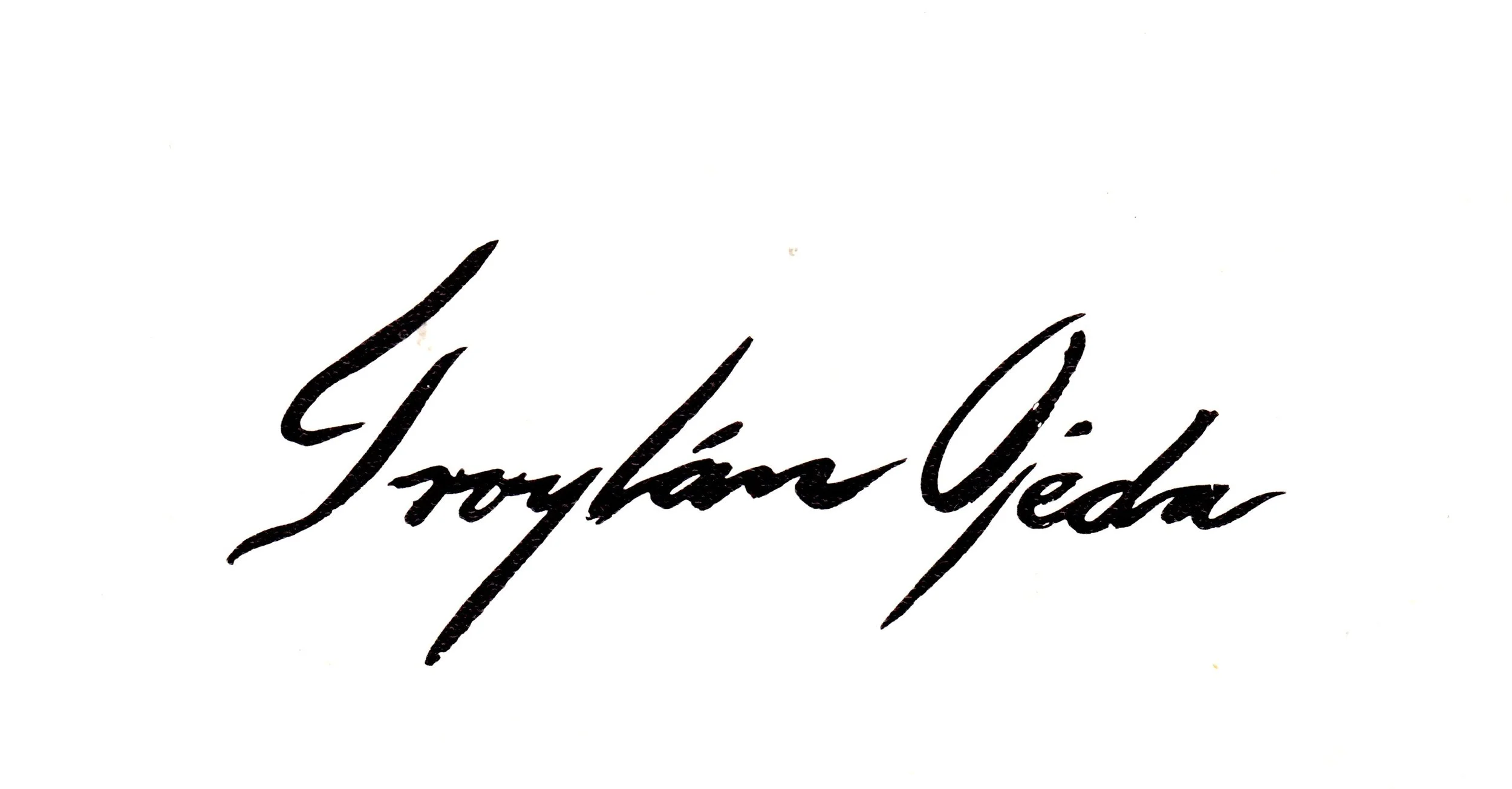
Froylán Ojeda (14th December 1932- 16th September 1991) is a surrealist painter weaving in elements of the lyrical, onírico, and the fantastical. Traces of his previous experimentations with figurative and abstract art blend into his scattered legacy. Through interviews with his family within his studio home in Roma Norte, I learn of his rebellious departure from his home in Veracruz for Mexico City when he was a young man. He had met his life partner Jesús at a young age and his family rejected their union. His father shunned him, his sister refused to speak to him. Only his younger brother, poet and historian Abelardo Ojeda, maintained a close and unshakeable bond with him. As I comb through Mexico’s myriad libraries and archives, I discover that, once living in CDMX, he worked first as a photo editor on la Calle Donceles, a street in el Centro Historico specialising in photography and books. 1n 1945, he enrolled in La Escuela Nacional de Artes Plasticas. He was awarded grants for studies at La Esmeralda and El Instituto Nacional de Bellas Artes, a symbol of great encouragement for his budding trajectory as a painter. In interviews he joyfully recounts his infatuation with Diego Rivera at that time, which pushed him in a certain artistic direction and observation of his catalog sees him embodying the Mexican painting style of the time. Early comments on his shows describe him as one of the most promising young painters in Mexican art. In 1958, aged 27, he curated a show with Telesforo Herrera as an homage to a lesser-known painter, Francisco Gutierrez, whose career and life both ended prematurely. The exhibition was held in the now destroyed Pergolas de la Alameda.
A shift in his visual trajectory then occurs: his sister-in-law speaks of her memory of his ingesting hallucinogenic mushrooms following which his figures catapult themselves into a Surrealist world. Whilst he was developing the style through which I discovered him, he made a lot of his income through private salons of women dealing, buying, selling and exchanging conversation around art from their living rooms. Ojeda was often called upon for portraits of these ladies when they wanted to be immortalised by the hand of a maestro who could see women with the things that surrounded them: beauty, grace and lots and lots of lovely birds. Through intimate conversation with one of his closest friends and keen observation of the catalog I have encountered thus far, I understand that aside from commissioned portraits of politicians and husbands, Froylán rarely represented men in his work. Titles of his masterpieces point to ambiguous, floating forms: in Viaje Unisexo, and male-presenting figures are shown shy and hiding. Ojeda’s most distinctive shapes remain his portrayal of hands, forms outstretched and inviting present and future witness into the layers of his work.
As he was held and adored by the women within these salons, his career skyrocketed and his solo shows caught like wildfire. He became comfortable enough to purchase a number of homes, eager to invite and share within them. The party holiday house in Cuernevaca hosted hoards of friends, family, artists and actors invited in a home of communal bliss and celebration. His nephew, Abelardo, though young at the time, specifically remembers rooms dedicated to a single color: a purple one, an orange one and yellow one. Surrealism had lodged itself into his uncle’s decorative output permanently. I have had the immeasurable honor of visiting his studio house on Calle Sonora. I sat within his tangible memory, conversed with his remaining family and learned about him in a space intrinsically linked to his artistic output. His third home in Condesa which he shared with Jesús, would boast industry-based receptions and small art shows that would often make it to the events bulletin of national newspapers. This house has been destroyed, taking with it a few murals. Only one of these homes is now left in the care of his immediate family. Despite a flowering increase in social activities, I have only ever heard of Froylán as being the quiet, caring, sensitive and sensible one in the couple.
When his surrealist eyes and voice began making their way through the fascination of onlookers and larger institutions, he began securing his position as a prized and venerated artist within the Mexican Art scene. Records show travels to London, Japan, LA, New York… I know now, after 4 years of searching, that as well as enchanting the masses with acrylic and brush, he maintained highly respected positions as a revered art critic, writing for news outlets such as the nationally distributed newspaper Excelsior. His unexampled creative pen was selected to illustrate various queer poetry anthologies. This includes La Historia de Un Millón de Muchachos; Una Generación Degenerada (1965)by Paolo Po, an essential, venerated figure in Mexican queer literature. Froylán’s illustrations of hands within its pages are, outside of commissioned portraits, the first representation of outward masculinity thus far encountered. For Juegos de Otoño (1982) by Aurora Marya Saavedra, Froylán produced eighteen ink illustrations accompanying the feminist prose of the writer. The illustrations portray delicate, phantasmagoric scenes reminiscent of children’s books. Ojeda was asked to illustrate El Rehilete, a poetry anthology founded and edited by women. He delivered talks for seminars in Mexican institutions, namely as a key-speaker for the 13 year anniversary of the death of Frida Kahlo. Froylán continued to be commissioned to paint portraits of celebrities, such as the first Mexican actress to feature nudity, Anna Peluffo. Fluent on screen himself, he presented the art section of La Moda en el Vivir. Froylán was a part of a group of thinkers and critics forming the collective Antimafia alongside Regina Raul and Arturo García Bustos.. They were invited to a round-table discussion on Una Hora con Paco Malgeste, discussing the ideas behind the formation of this art collective. A painting by Froylán was featured in Nueva Iconografía Sor Juana Inés De La Cruz, an investigative book chronicling the presence of the venerated Sor Juana within artistic mediums. The writer of this collection, Noemí Atomoros, was a close friend of his. He interviewed her on various occasions and vice versa.
Invitations to present solo-shows in galleries were a constant occurrence. With regular appearances. in La Galeria de Plastica Mexicana (INBAL,) he was featured in approximately 600 local and international exhibitions (group shows and solo presentations.) Galleries promoting and boasting his his solo exhibitions include: Galerías Escudero (1969) ; Salón de la Plástica Mexicana (1970) ; Galería Plástica de México (1971, 1972, 1973) ; Galeria Trini, Cuernavaca (1973) ; Galleria Tere Hass (1973); The Connoisseur Gallery, California (1974) ; Instituto Francés de la América Latina (1977) ; Galleria Liverpool, Nuevo Leon (1985) ; Salón de Sorteos de la Lotería Nacional (1987.)
In group presentations ranging from regular galleries such as Galeria Gabriela Orozco, Galería José María Velasco, Galéria Fénix, Galéria Miro (and many more,) he was exhibited alongside artists such as Sofía Bassi, Francisco Zúñinga, Luis Nishizawa, Angelina Beloff, Raul Anguiano, José Clemente Orozco, Violetta Swann, Puri Yanez, Hector Ayala, Maria Izquierdo, Trinidad Osorio, Feliciano Bejar, José Reyes Meza, Feliciano Pena, Alice Rahon.. “Ventas de Navidades” and other renowned charity events displayed his paintings for fundraising alongside Diego Rivera, Remedios Varo, Leonora Carrington and Doctor Atl.
Outside of exhibition contexts, the name and œuvre of Froylán Ojeda was regularly featured in the press, confirming the reach of his talent on a large national scale, accessible in homes and smaller cities and towns. Through pieces such as “La Secunda Epoca de Froylán Ojeda” by Raúl Virgilio Valdivieso (El Nacional- 1968, ) “Signos de Froylán Ojeda” by Leonor de Villafranca (Mañana - 1969,) “Un Examen del Arte en La Pintura” by Helia D’Acosta (Impacto-1969) the painter established an omnipresence in his home of Mexico, in the home of collectors, in the homes of affluent women and was circulating in the hands of all audiences across the country. For a few consecutive years, he was featured in Artitas Plasticos Mexico (GDA, Ediciones Culturales) as an essential artist of the Mexican art scene. Perhaps yearning for a solidified, everlasting presence, Ojeda self published the only book covering his work until the years 1974.
Towards the end of his life, his partner was involved in a car accident, the consequences of which were fatal for others. Legal fees had to be covered by accelerated sales of the work of Ojeda, which rendered his artistic output a fragile one. After an exhausting emotional recovery, the pair contracted HIV/AIDS. News sources located thus far show his presence on the art scene until 1989. Elena Briones-Ojeda remembers and recounted the last few months of his life: Froylán lost his eyesight first, and became unable to hide within the painting process that had rewarded him in his adult life. She recalls his unstoppable crying and her final goodbyes to him. He passed the 16th September 1991, and now lies in La Ilgesia de La Coronación de Santa María de Guadalupe, Col. Condesa.
It was thereafter that he began disappearing from wider conversations. With paintings peppered across the globe, his face and memory became a blurry component of Mexican Art History. Until he was caught extremis: despite a 30 year gap, it seems Froylán's determination to create an immortal space in the art world worked. In 2021, I came across a scan of a photograph of a painting in the only book on Froylán. A cluster of its contents was uploaded by his nephew Abelardo Ojeda onto a Tumblr account dedicated to his uncle. Years passed, and I felt haunted by it. In 2023, I stumbled across a copy of the book in question on Calle Donceles, the street on which he worked when he first began the artistic chapter of his life in Mexico City. When I contacted his nephew 2024, he asserted that no one had asked him or his family about his uncle since his tragic passing in 1991.